Willow (Salix)
Identification
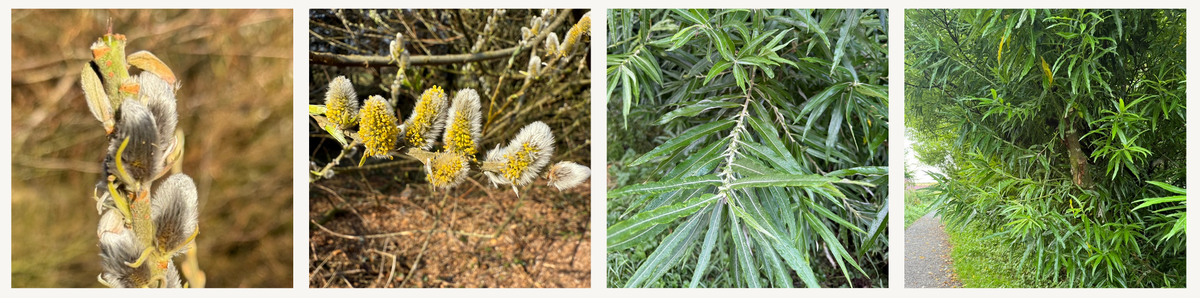
Alternating leaves, which are usually long and slender. Buds are often fuzzy. Catkins look like enlarged buds, standing upright, and away from the tree. Seeds are light and float like dandelion heads.
Botany
Enjoys wet soil and river banks. It is common for willow trees to hybridise, so identification to the species level can be quite difficult.
Lore
Willow was known as the muse to poets in Ancient Greece.
How to make willow ink
As I write this, the willow tree behind our village pub is just starting its budburst. The sheath that has been protecting the buds is being sloughed off, to reveal pink catkins and the tiny curl of what will become leaves. The sequence is as such: catkins develop their recognisable grey fuzz, then yellow anthers will pop out from under the fuzz. Finally, the leaves will stretch out to their full length, and the shoots will begin this year's growth.
Our willow ink is made from this tree. I use pocket clippers (secateurs) to clip small branches less than 1cm in diameter from maintenance clippings and windfall that's left on the side of the path. (In summer, I'll also use the same secateurs to tidy any small branches that have been snapped and left hanging.) Only a small amount of bark is needed.
Part of the plant to use
Use the leaves and/or bark from willow plants
Colours
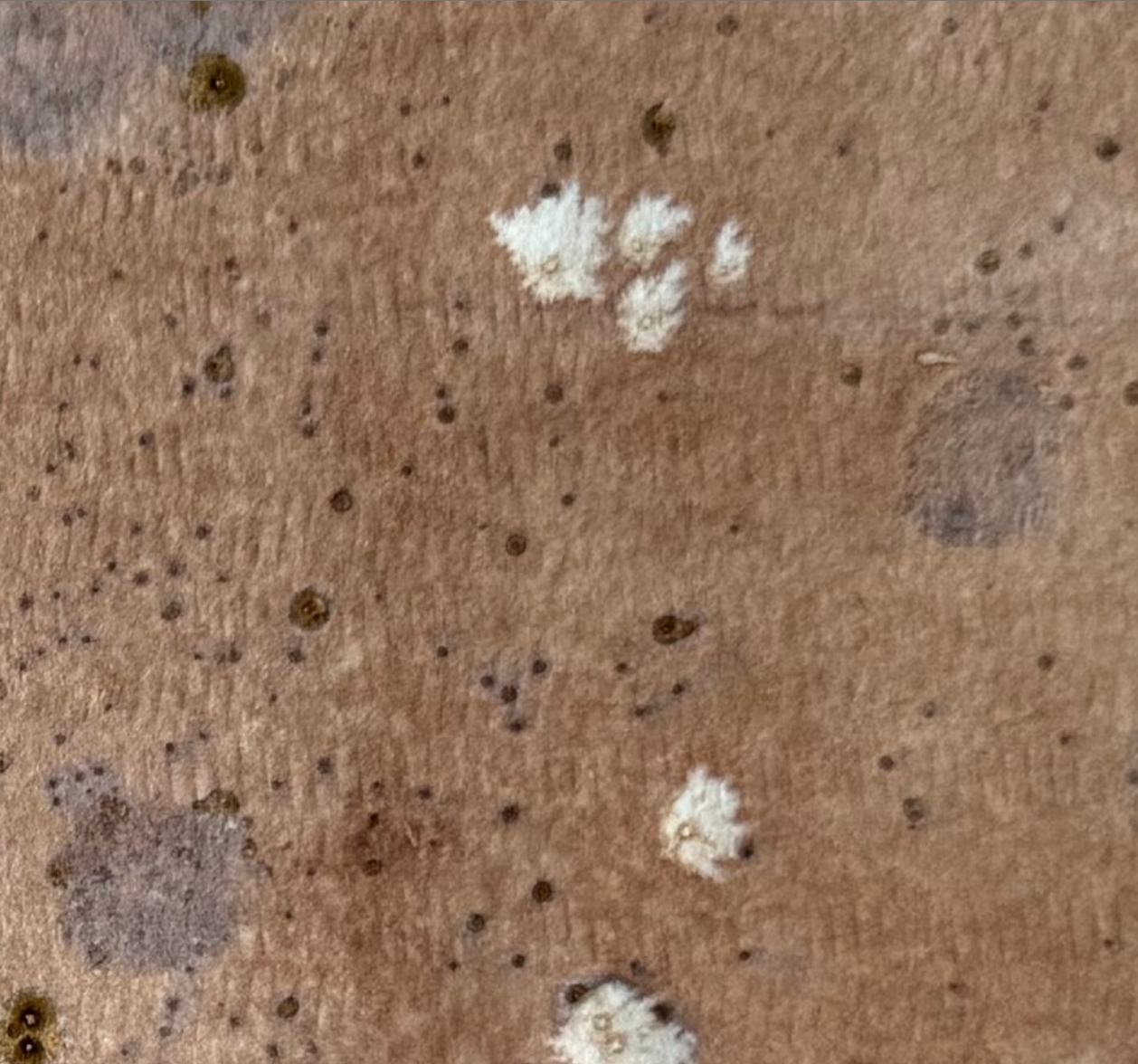
It's possible to make browns, reddish-brown, and adjust the colour to grey using iron II sulphate.
Recipe for willow bark ink
Willow is generally not considered poisonous, but ideally you will complete these steps using equipment that is not also used for food.
- Chop branches into 2-3cm lengths (about 1"), and place into a stainless steel pot.
- Cover with water. Tap water is fine.
- The colours will be more easily extracted if you make the water alkaline. Usually, I add about 1tbsp of baking soda per 750mL water. I'm not terribly precise, and things nearly always work out.
- Bring to a full boil, and then reduce the heat to a medium simmer.
- Cook for about 30 minutes.
- Remove from heat, and strain out the branch clippings. Deepen the colour further by returning the liquid to the pan, and continue to simmer on medium-low heat.
- You can sometimes achieve different colours by repeating steps 2-6 a second and third time. I've found subsequent batches from the same clippings are a little more red. Your willow may be different.
- To thicken the ink, and to help with its longevity, add some gum Arabic. For each 100mL of plant water, add 10mL gum Arabic.
- Decant into sterilised bottles for storage. Label with the name of the plant, its location, and the date.
In my experience, willow ink prepared in this manner does not develop mould on the surface, but you can add a whole clove, or a few drops of clove essential oil to the bottles if you would like.
Ink-terested?
We love Wild Colour and making inks from plants we've foraged on Dartmoor. Are you interested in botanical ink, too? Sign up to our monthly newsletter, and we'll send you a free recipe you can use to make your own at home.