The lineage of trees in the Dartmoor pollen record
None of what I've studied looks at the links of the trees that colonised Dartmoor after glaciation compared to the trees that are here today. Genetics are not referenced -- simply the familial relationship of a species within a genus. A continuous lineage of native trees is a romantic idea. The reality is messier — plantings, blow-ins, escapes.
Lineage and memory in trees have, however, been researched. Research from the MEMBRA project identified that some species of trees can imprint their offspring with resilience for drought based on their own experience of it. And, in Thus Spoke the Plant, Monica Gagliano reports on her research into the ability for plants to hear and learn (a recap is available here).
Spruce
The conifer plantations on Dartmoor started in the mid-to-late 1800s, and the most recent are from the 1950-60s. The trees are fast-growing trees that act as wind blocks and cash crops. The long-term ambition is to remove the plantations when they mature, and replace them with more appropriate trees. The forest floor in a spruce plantation is nearly bare. Yes, the song birds appreciate the cover they provide, but the dark shade thrown prevents other things from growing, like bluebells.
Oak
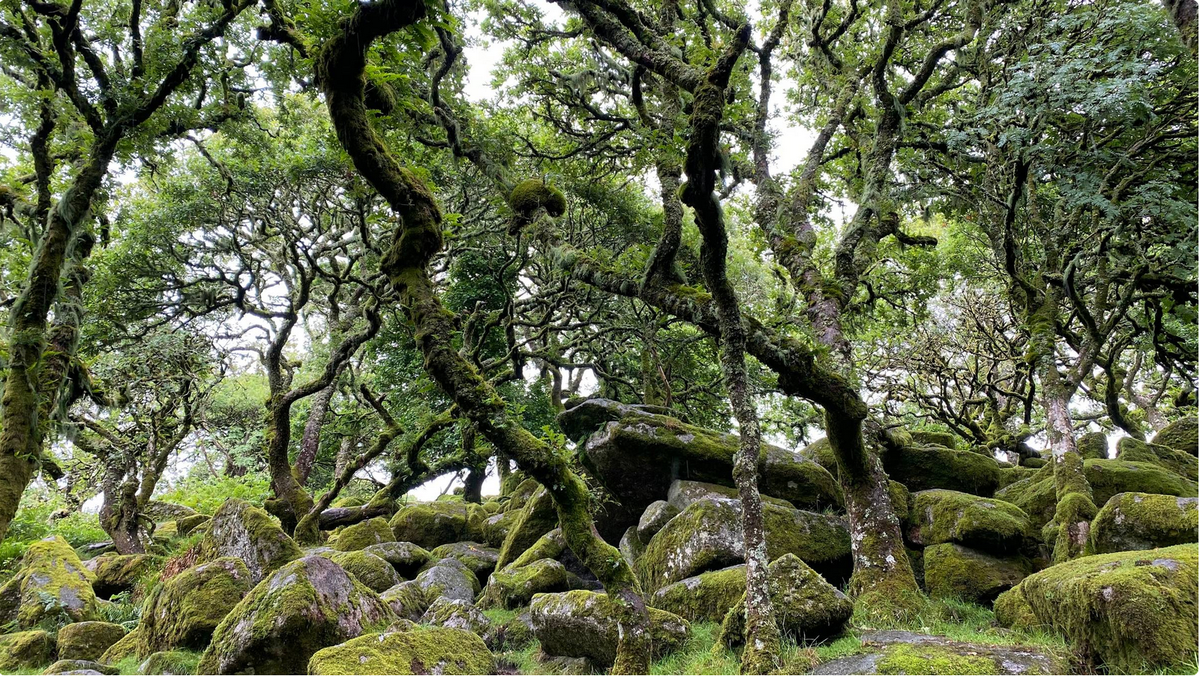
Dartmoor has two native oaks. The pollen record can't tell them apart. Pedunculate oak (Q. robur) and sessile oak (Q. petraea) produce identical pollen. The record only says "oak." Most of southwest England is sessile oak country. But Wistman's Wood — on Dartmoor's high moor — is pedunculate. The pollen record gives us the genus. The tree itself tells you the species. You have to go and look.
Foraging with this in mind changes what you notice: not just what's there, but whether it belongs.